Administrative toolbar content

Administrative toolbar footer

Help

  • Help

Anonymous

  • Anonymous
    • View profile
    • Edit profile
    • Log out
Home

Main navigation

  • Home
  • About Us
  • Attorneys Directory
  • Faces of Injustice
  • MEMBERSHIP SIGN-UP
  • Sign-In
  • Free First 72 Hours Checklist
  • Motion Vault
  • Prison Project Advocacy Center
  • Senate bill 244
  • Support Prison Project
  • The Constitution of the United States of America
User login
  • Create new account
  • Reset your password

Breadcrumb

  1. Home
By Newsroom Publisher, 31 October, 2026

Federal Prison Education: The 240-Hour Literacy Rule and What It Does Not Guarantee

Image
Prison Project editorial headline graphic: Federal Prison Education: The 240-Hour Literacy Rule and What It Does Not Guarantee
The Federal Bureau of Prisons says literacy education is available throughout its institutions and has participation requirements for many people without a diploma or GED.
By Newsroom Publisher, 31 October, 2026

Federal Prisons and the 500-Mile Rule: Closer to Home Does Not Mean a Guaranteed Transfer

Image
Prison Project editorial headline graphic: Federal Prisons and the 500-Mile Rule: Closer to Home Does Not Mean a Guaranteed Transfer
The First Step Act calls for federal placements as close as practicable to a primary residence, but families should not read it as a guarantee of a particular institution.
By Newsroom Publisher, 30 October, 2026

Federal Halfway Houses, Home Confinement and Supervised Release Are Three Different Stages

Image
Prison Project editorial headline graphic: Federal Halfway Houses, Home Confinement and Supervised Release Are Three Different Stages
Federal families often use the word release for several legally different arrangements. A residential reentry center, home confinement and supervised release do not mean the same thing.
By Newsroom Publisher, 30 October, 2026

Opting Out of a Federal Prison Program Can Change Time Credits: What BOP's Rules Say

Image
Prison Project editorial headline graphic: Opting Out of a Federal Prison Program Can Change Time Credits: What BOP's Rules Say
The BOP distinguishes successful participation in assigned programs from opting out or refusing a mandatory program. Those details may affect earned time credit and other consequences.
By Newsroom Publisher, 30 October, 2026

Federal Prison Risk Assessments: Why the Last Two Scores Matter for First Step Act Credits

Image
Prison Project editorial headline graphic: Federal Prison Risk Assessments: Why the Last Two Scores Matter for First Step Act Credits
A single low-risk assessment may not answer whether earned time credits can be applied. The BOP describes a review built around repeated assessments and individualized circumstances.
By Newsroom Publisher, 30 October, 2026

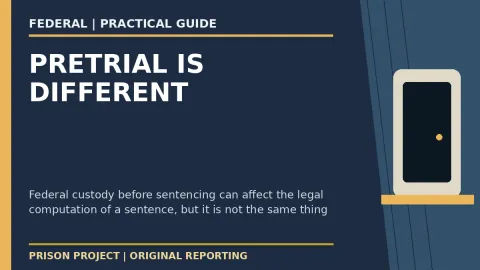
Why Federal Pretrial Jail Time Does Not Automatically Earn First Step Act Program Credits

Image
Prison Project editorial headline graphic: Why Federal Pretrial Jail Time Does Not Automatically Earn First Step Act Program Credits
Federal custody before sentencing can affect the legal computation of a sentence, but it is not the same thing as First Step Act programming time.

Silencing the Signal: The FCC’s Prison Cellphone Jamming Plan and the Fight Over Safety, Communication, and Accountability

By Newsroom Publisher, 29 October, 2026

Federal First Step Act Credits: Earning Days Is Not the Same as Applying Them

Image
Prison Project editorial headline graphic: Federal First Step Act Credits: Earning Days Is Not the Same as Applying Them
The Bureau of Prisons distinguishes accumulating earned time credits from having them applied to a move toward community custody. Confusing the two can produce false release expectations.
By Newsroom Publisher, 29 October, 2026

Georgia Prison Reentry: Why Birth Certificates, IDs and Benefits Records Should Start Early

Image
Prison Project editorial headline graphic: Georgia Prison Reentry: Why Birth Certificates, IDs and Benefits Records Should Start Early
An identification problem can follow a family all the way from a prison gate to a job interview, pharmacy or housing application. GDC's transitional services materials describe planning needs that start well before the release date.
By Newsroom Publisher, 29 October, 2026

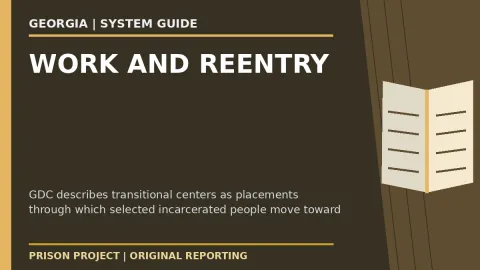
Georgia Transitional Centers: Work Release Is a Program, Not an Automatic Transfer

Image
Prison Project editorial headline graphic: Georgia Transitional Centers: Work Release Is a Program, Not an Automatic Transfer
GDC describes transitional centers as placements through which selected incarcerated people move toward community work and release preparation. Placement is not guaranteed simply because a release date approaches.


Pagination

  • First page
  • Previous page
  • Page 1
  • Page 2
  • Page 3
  • Page 4
  • Page 5
  • Page 6
  • Page 7
  • Page 8
  • Page 9
  • …
  • Next page
  • Last page
RSS feed

Main navigation

  • Home
  • About Us
  • Attorneys Directory
  • Faces of Injustice
  • MEMBERSHIP SIGN-UP
  • Sign-In
  • Free First 72 Hours Checklist
  • Motion Vault
  • Prison Project Advocacy Center
  • Senate bill 244
  • Support Prison Project
  • The Constitution of the United States of America