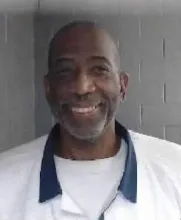
Faces of Injustice
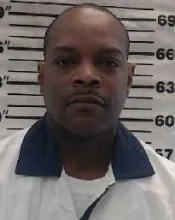
Faces of Injustice: Andre Knights
Andre Knights is not asking to walk away from responsibility. He is asking to survive it.
On October 10, 2025, Andre was convicted in Forsyth County of fleeing and eluding and possession of cocaine. He was sentenced to one year and ten days in confinement, followed by five years of probation. At sentencing, the court did not receive critical medical evidence. That omission was not Andre’s doing, and it changed everything.
Andre is living with end-stage renal disease, congestive heart failure, and stage-four hypertension. He requires dialysis three times a week to stay alive. While in custody, the Georgia Department of Corrections failed to properly prepare his dialysis treatment. The result was a medical emergency and a week-long hospitalization. This was not a fluke. It exposed a system that cannot reliably meet his medical needs.
Andre’s doctors have been clear. His treating nephrologist and primary care physician have documented that continued incarceration places his life in danger. Andre is currently on the kidney transplant list. He needs specialized, consistent medical care. His facility cannot provide it.
That leaves two unavoidable truths.
Keeping Andre incarcerated creates a serious and unjustifiable risk of death.
Keeping him incarcerated also places an extraordinary and unnecessary medical burden on the State, one that could be avoided through supervised alternatives.
Andre is not denying accountability. He is asking for a humane, medically appropriate alternative that allows punishment and supervision without turning a sentence into a death sentence.
He has asked the Georgia State Board of Pardons and Paroles to consider options the law already allows: home confinement, supervised home detention, medical parole, or another parole-based conditional release appropriate to his condition.
There is more at stake than Andre alone. His fiancée is two months pregnant with their second child. Andre is the primary financial and emotional support for his family. His continued incarceration destabilizes them, while his medical condition makes confinement potentially fatal.
Andre has offered full compliance. Electronic monitoring. Strict supervision. Medical reporting. Probation conditions. Whatever is required. This is not a request for convenience. It is a request for survival.
This case raises a simple question with heavy consequences. What public safety purpose is served by keeping a critically ill man in a facility that cannot keep him alive?
Andre Knights’ story is not about avoiding punishment. It is about whether the system will recognize when punishment crosses the line into irreversible harm.

FACES OF INJUSTICE — PRELIMINARY CASE SUMMARY
Name: Gary Wayne Sutton
State: Tennessee
Status: Death Row
Time Incarcerated: Over 30 years
Execution Date: Set (Tennessee)
Gary Wayne Sutton has spent more than three decades on Tennessee’s death row for two 1992 murders in East Tennessee. His case has drawn growing attention because of serious questions about the evidence used to convict him and the reliability of key testimony presented to the jury.
The prosecution’s case relied heavily on a disputed timeline rather than physical or forensic evidence directly tying Gary Wayne Sutton to the crimes. Supporters and defense filings have long argued that there was no direct physical evidence connecting him to the murders.
Central to the State’s timeline was testimony from a medical examiner whose credibility later collapsed. That medical examiner would go on to lose his license and become associated with misconduct in other cases. At the time of trial, the jury was not informed of these credibility issues.
Independent reporting and court records indicate:
– No direct physical evidence linking Gary Wayne Sutton to the crimes
– A prosecution theory built around contested time-of-death assumptions
– Key forensic testimony later shown to come from a discredited source
– Unresolved questions about whether critical information was withheld from the jury
Despite these unresolved issues, Gary Wayne Sutton remains under a sentence of death, with an execution date now set as Tennessee resumes executions following a statewide pause.
This Faces of Injustice file is currently under development. Trial transcripts, forensic records, post-conviction filings, and additional documentation are being requested and reviewed. This summary will be updated as source materials are verified.
GET INVOLVED / LEARN MORE
Official case advocacy site:
https://www.justiceforgarywaynesutton.com/
Public petition calling for relief and review:
https://www.change.org/FreeGarySutton
Additional media coverage and investigative reporting links will be added as records are reviewed and verified.
Status: Active case review
Next step: Records collection and document verification
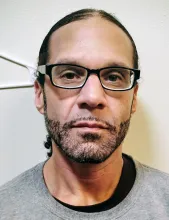
My name is Antonio Akel. I was federally prosecuted in the Northern District of Florida (Pensacola Division) in United States v. Akel, Case No. 3:07-cr-136-LC. The case originated from allegations that I conducted two “controlled buys” on May 31 and July 18, 2007. Those allegations became the probable-cause predicates for my arrest warrant, search warrant, and indictment, and were also charged as Counts 4 and 5 of the indictment. After trial, the jury acquitted me of Counts 4 and 5, and those acquittals necessarily resolved the alleged controlled buys in my favor.
Despite those acquittals, the government and courts continued to treat the alleged controlled buys as if they occurred. On direct appeal, the Eleventh Circuit’s opinion relied on a version of events that assumed the controlled buys were real, in tension with what the jury necessarily rejected. See United States v. Akel, 337 F. App’x 843, 857–58 (11th Cir. 2009). My core legal issue is apparent on the face of the record: once a jury acquits on the factual predicates that supplied probable cause, the government cannot relitigate those predicates as true. Continued reliance on acquitted facts violates the Fifth Amendment’s collateral-estoppel protection embedded in double jeopardy under Ashe v. Swenson and Yeager v. United States.
The record also includes sworn testimony indicating that the controlled-buy narrative was not the reliable foundation it was later portrayed to be. During my first post-conviction proceedings, an evidentiary hearing was held in 2014. My trial counsel testified that the controlled buys were dispositive to the entire case, that I was acquitted of them, and that he did not file the motions that would logically follow from that outcome. The transcript reflects, inter alia:
“And one more time for the record, sir, just to be sure, you said that there wasn’t any particular reason that you didn’t file for dismissal of the indictment or the Franks hearing once evidence was discovered that those controlled buys were false.”
“I didn’t file anything.”
“You didn’t file anything.”
“No, sir.”
(Dkt. 220 at 51–52 & 55–56.)
In short: the jury acquitted me of the controlled buys that formed the probable-cause foundation, yet the legal consequences of those acquittals have been suppressed through subsequent litigation positions and judicial characterizations that continued to rely on the acquitted predicates.
My current procedural posture is this: following the Supreme Court’s action in 2017 that vacated the denial of my prior § 2255 proceedings (Cert. No. 16-6032), I later filed a new § 2255 motion on September 30, 2021 (Dkt. 453) challenging my convictions on constitutional grounds. My ability to file a new § 2255 rests on the “new judgment” framework recognized in Magwood v. Patterson and applied in the Eleventh Circuit in Insignares v. Sec’y, Fla. Dep’t of Corr. (a new judgment permits a new first § 2254/§ 2255 challenge). My current § 2255 posture has been delayed by litigation over whether the motion is “second or successive,” but the merits remain tethered to the face-of-record conflict: acquittals on the probable-cause predicates versus continued reliance on those predicates.
The relief I am seeking is vacatur of my convictions and sentence, recognition that the acquittals eliminate the government’s ability to continue relying on the controlled-buy predicates, and issuance of a certificate of innocence. I am asking for review that is factual, record-based, and faithful to the constitutional consequences of a jury acquittal.